01
Put the menu online
Sections, dishes, prices and photos go on one page you control. Any restaurant digital menu India diners open should load in a second or two, so keep images light.

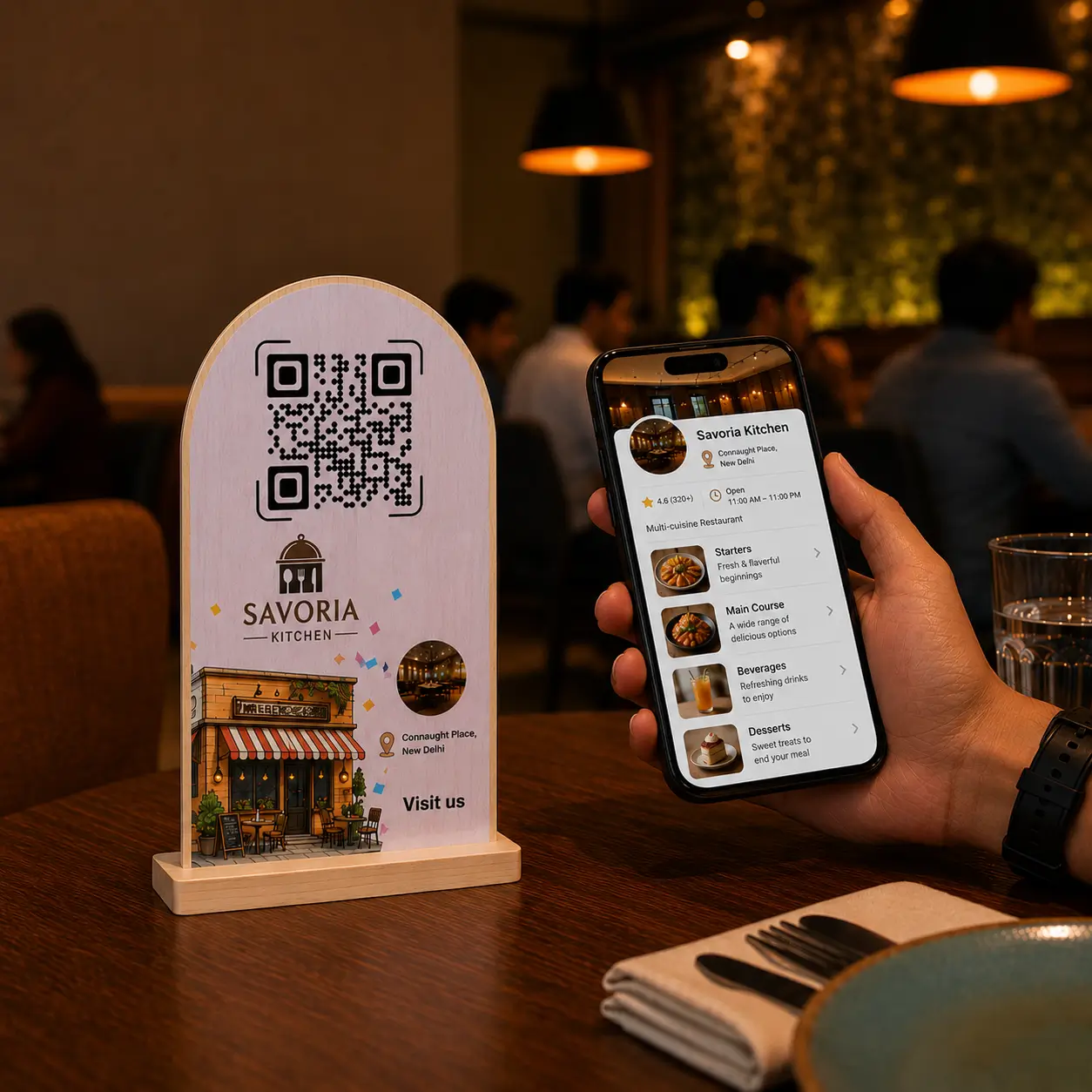
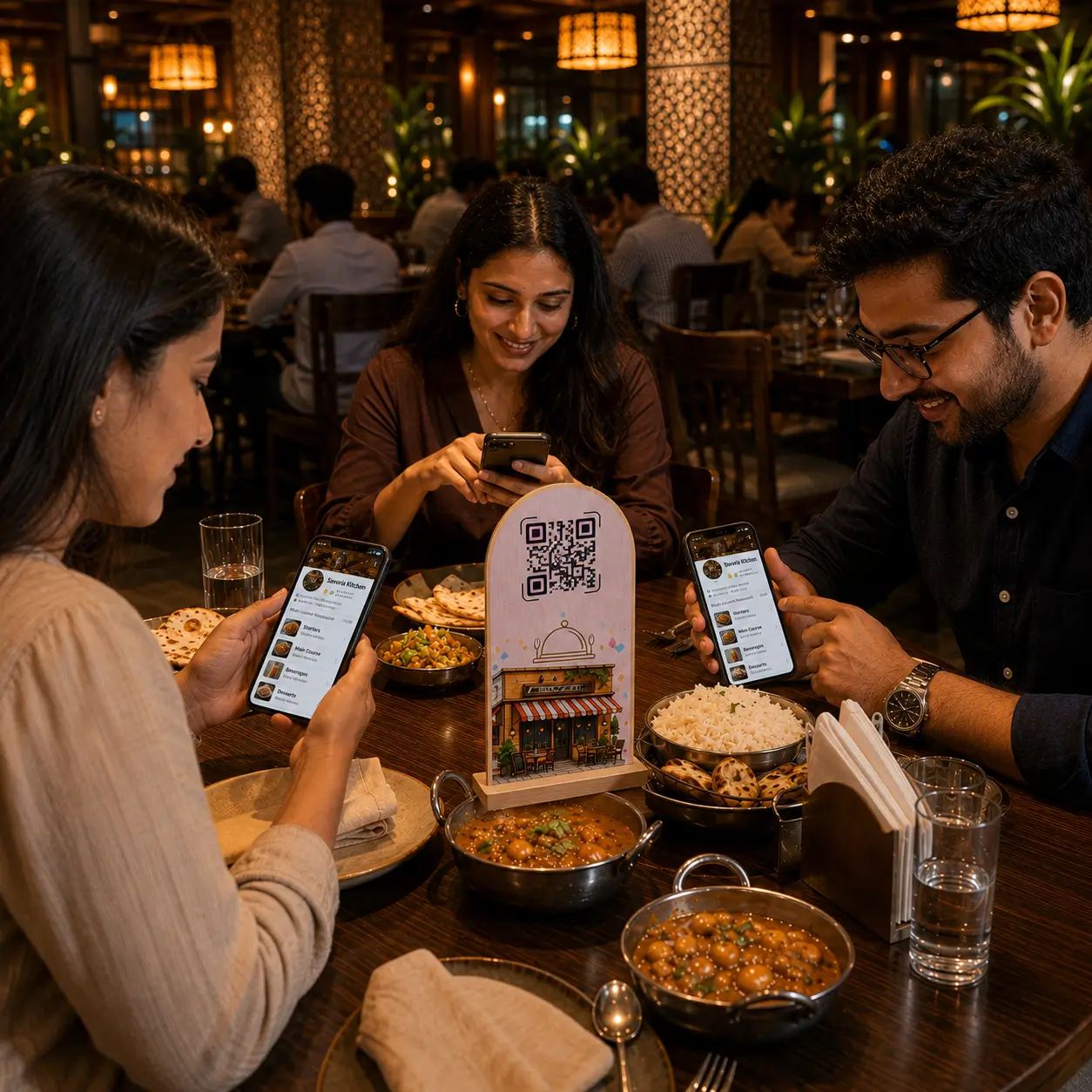
Reprinting laminated cards every time a price moves is money on fire. A QR code menu for restaurant tables puts the whole card on the guest's phone, and changing a dish takes a minute instead of a print run.
What changes on the floor once the menu lives online.
One price revision means the whole batch again.
Edit once and every table shows the new rate.
Patched menus look careless to a paying guest.
Guests order more confidently when they can see it.
Specials stay invisible until staff describe them.
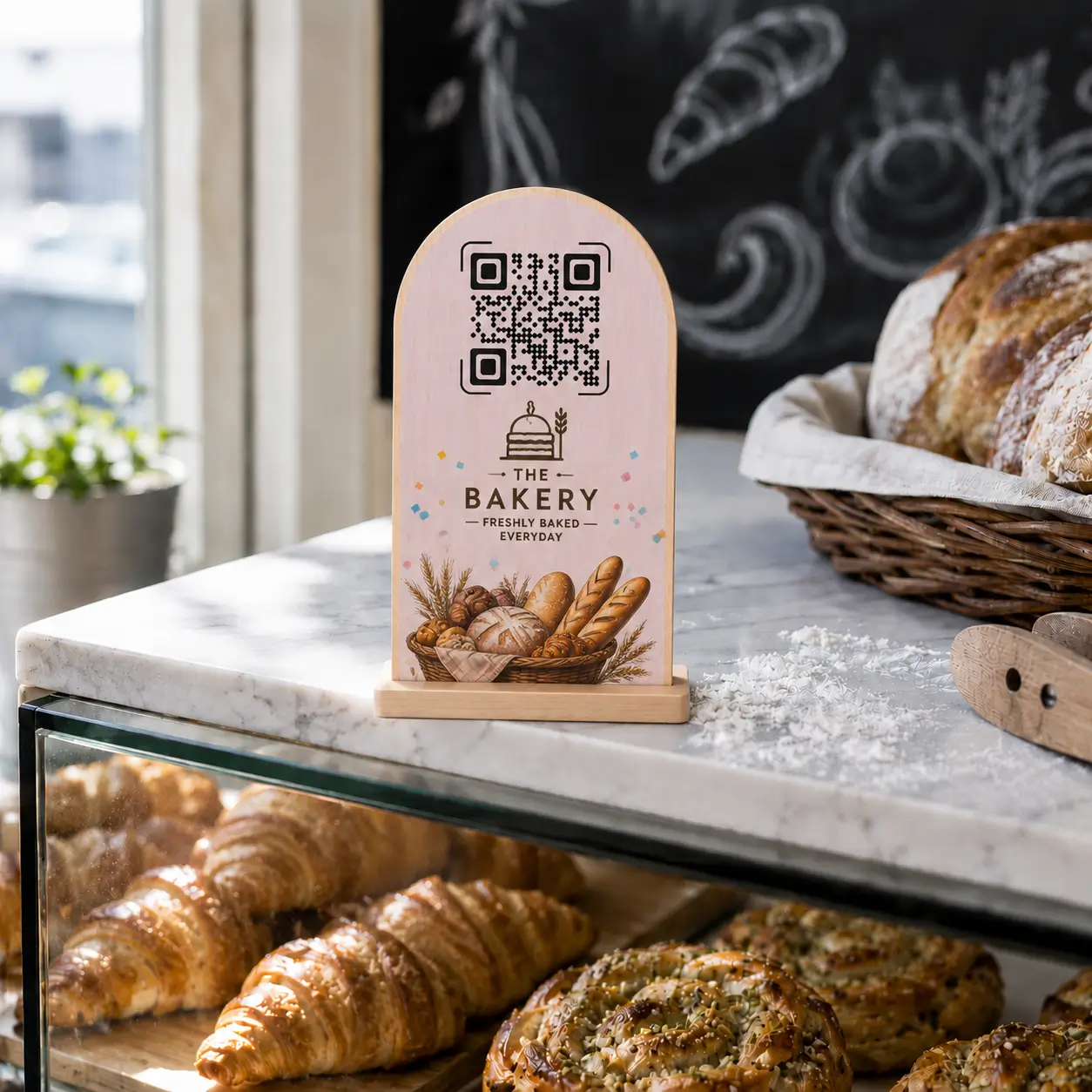
The standee stays on the table between covers.
Torn, stained or walked off with by the weekend.
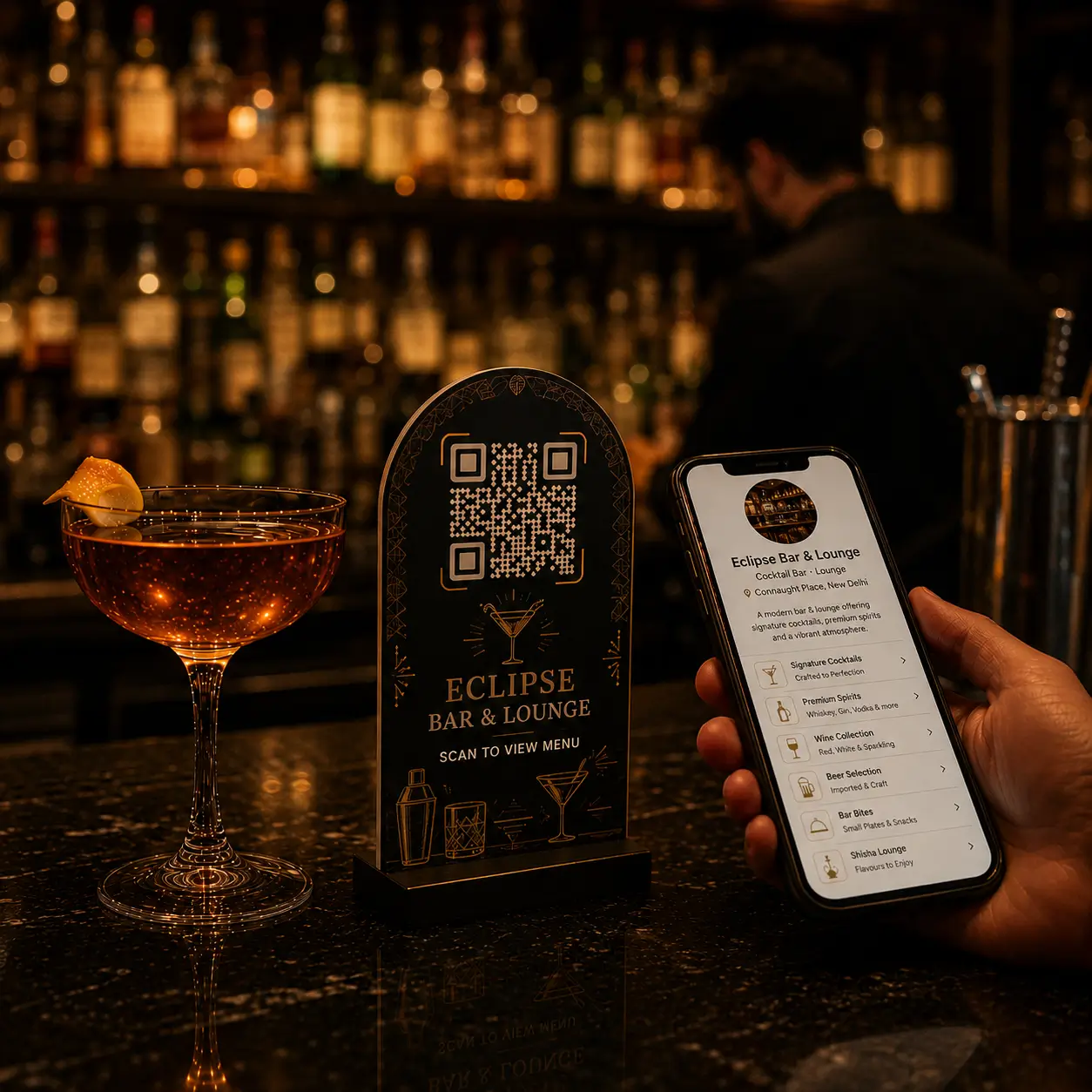
The same table tag can invite a Google review.
What you get
Live edits from your phone, nothing for the guest to install, review collection on the same tag, and a menu your regulars can read in their own language.
Sold out at eight in the evening? Hide the dish from your phone and the next scan will not show it. That single habit is what makes a digital menu QR code India owners actually keep using, rather than abandoning after a month.
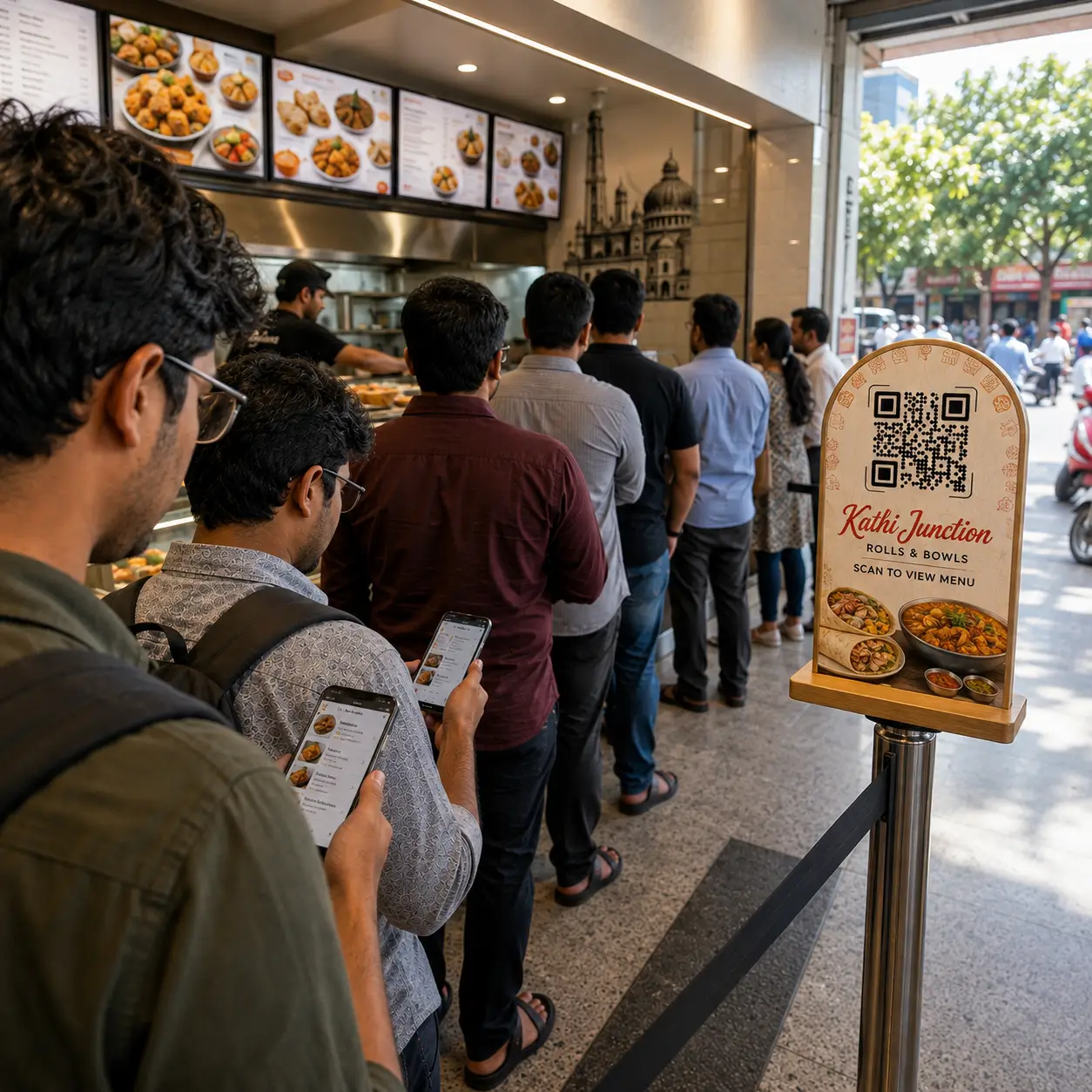
The contactless menu QR India guests are used to needs only a camera, and newer phones can tap the same tag instead.
One table tag can carry the menu at the start of the meal and a review prompt at the end, so both jobs share the same footprint.
The same dishes can sit on the page in more than one language, so a guest who would rather read Hindi or Marathi is not squinting at English alone. On a laminated card that would mean a second print run and twice the reprinting later.
A scan menu pays for itself fastest where the card changes often or gets handled all day. Four kinds of outlet where that is true.
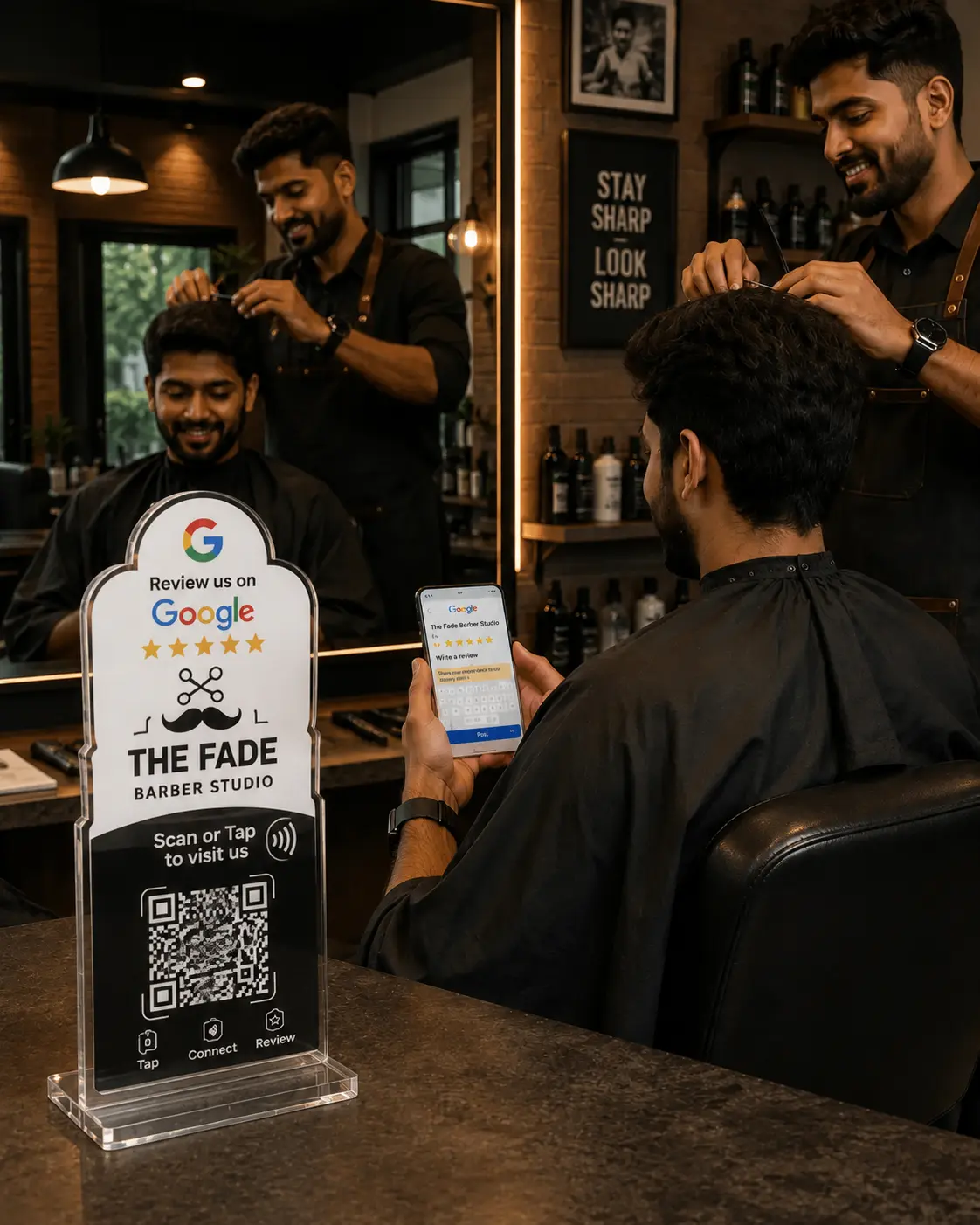
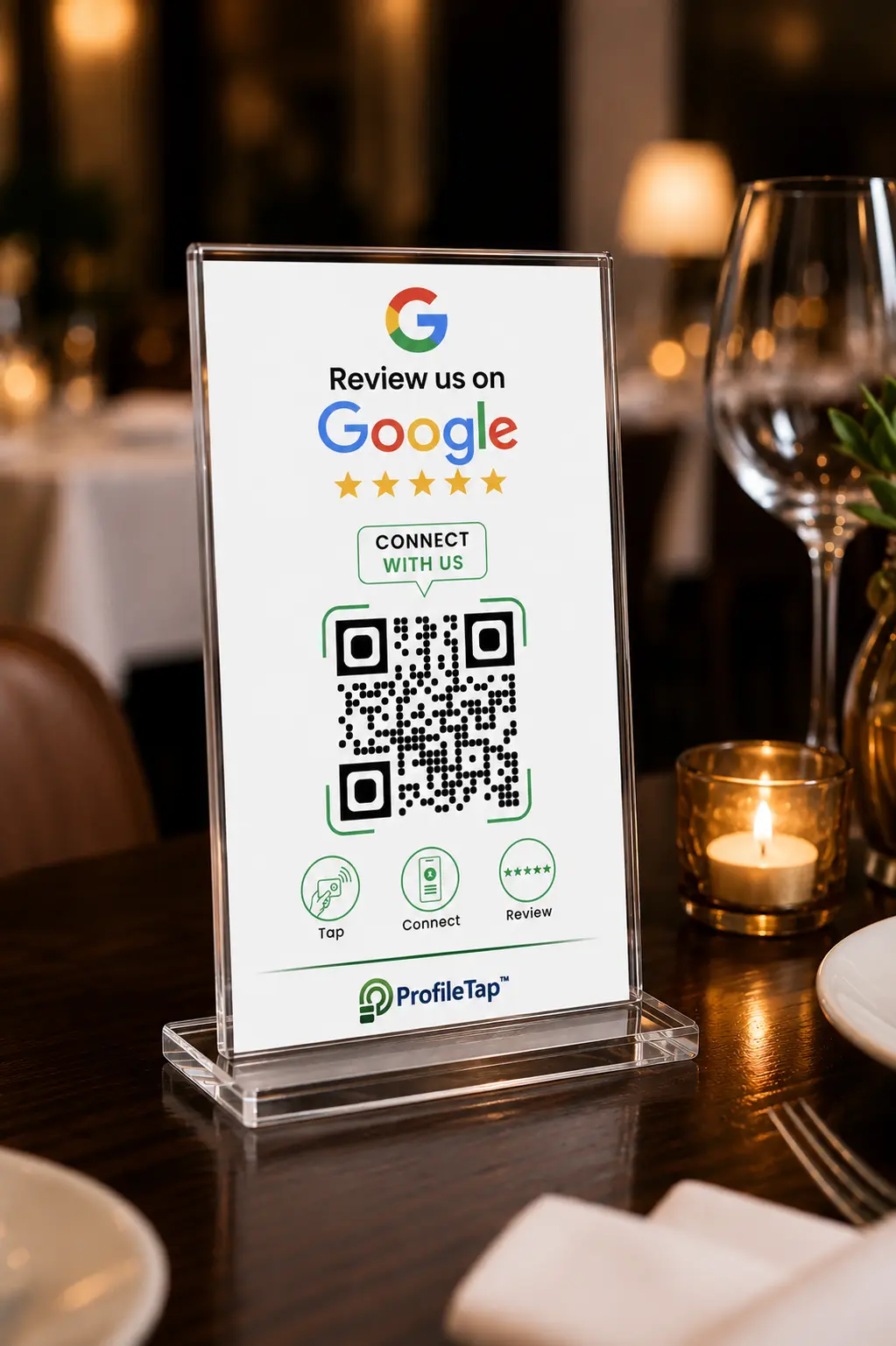
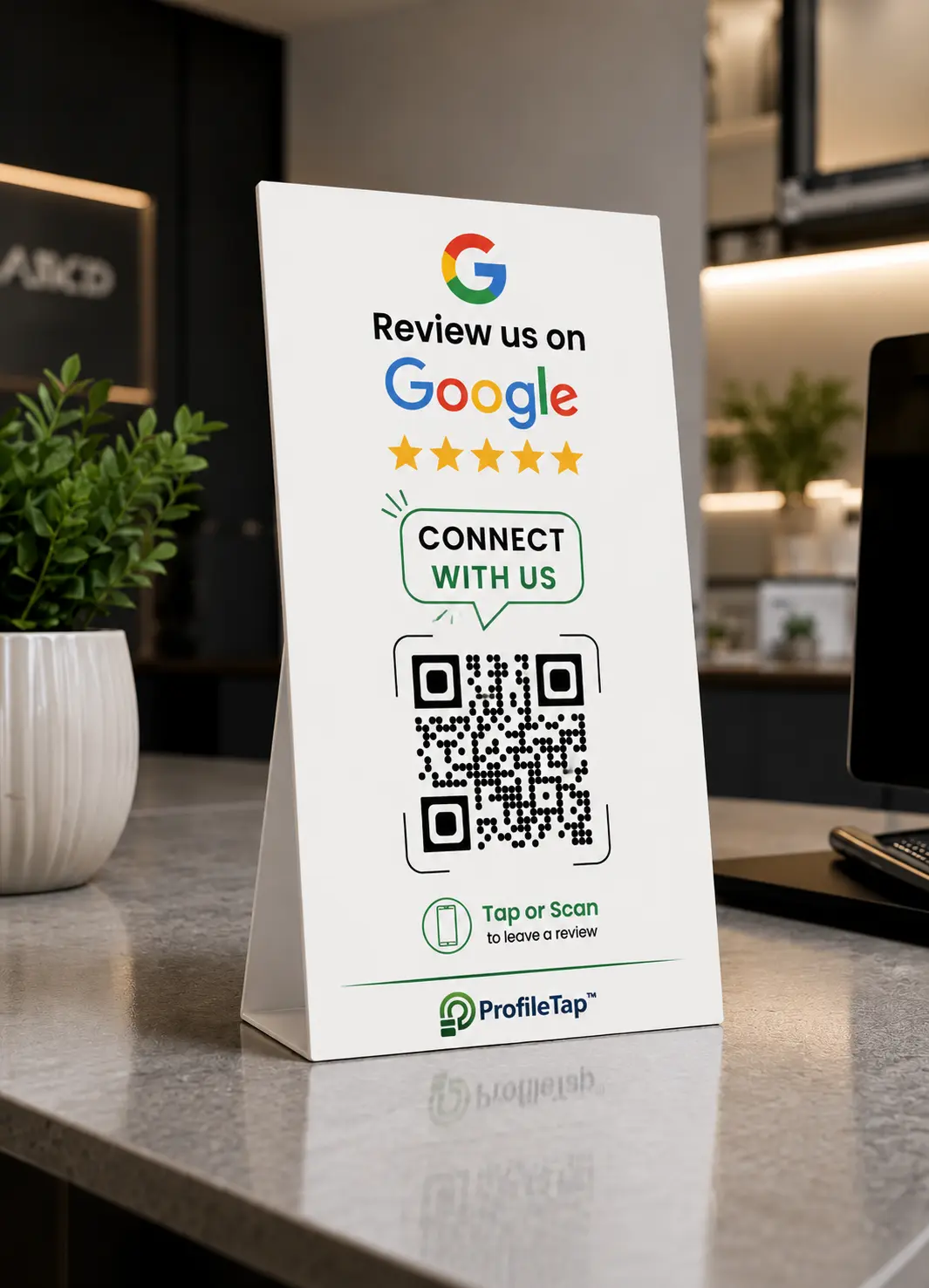
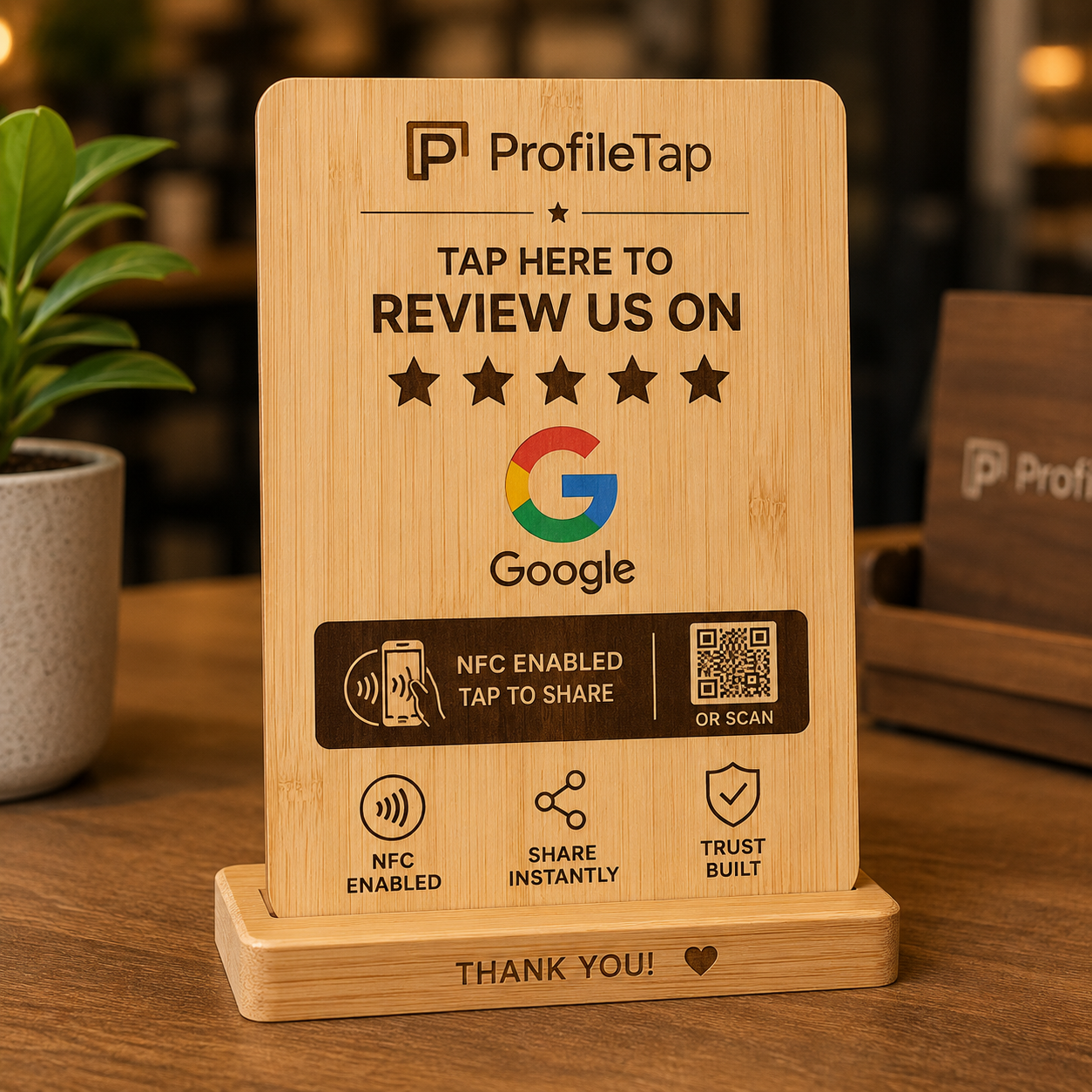
Standees for the table, tags for the counter, stickers for everywhere else.
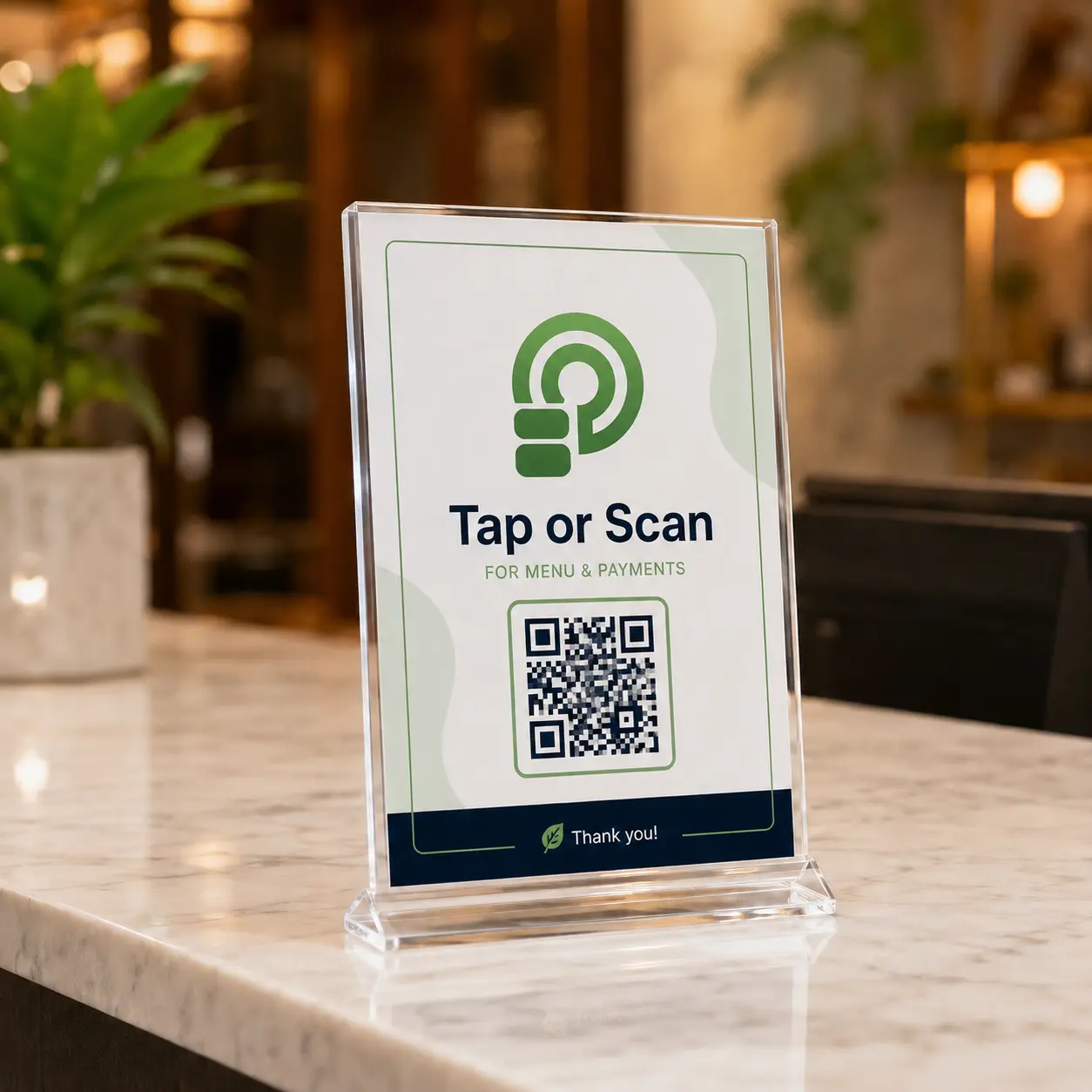
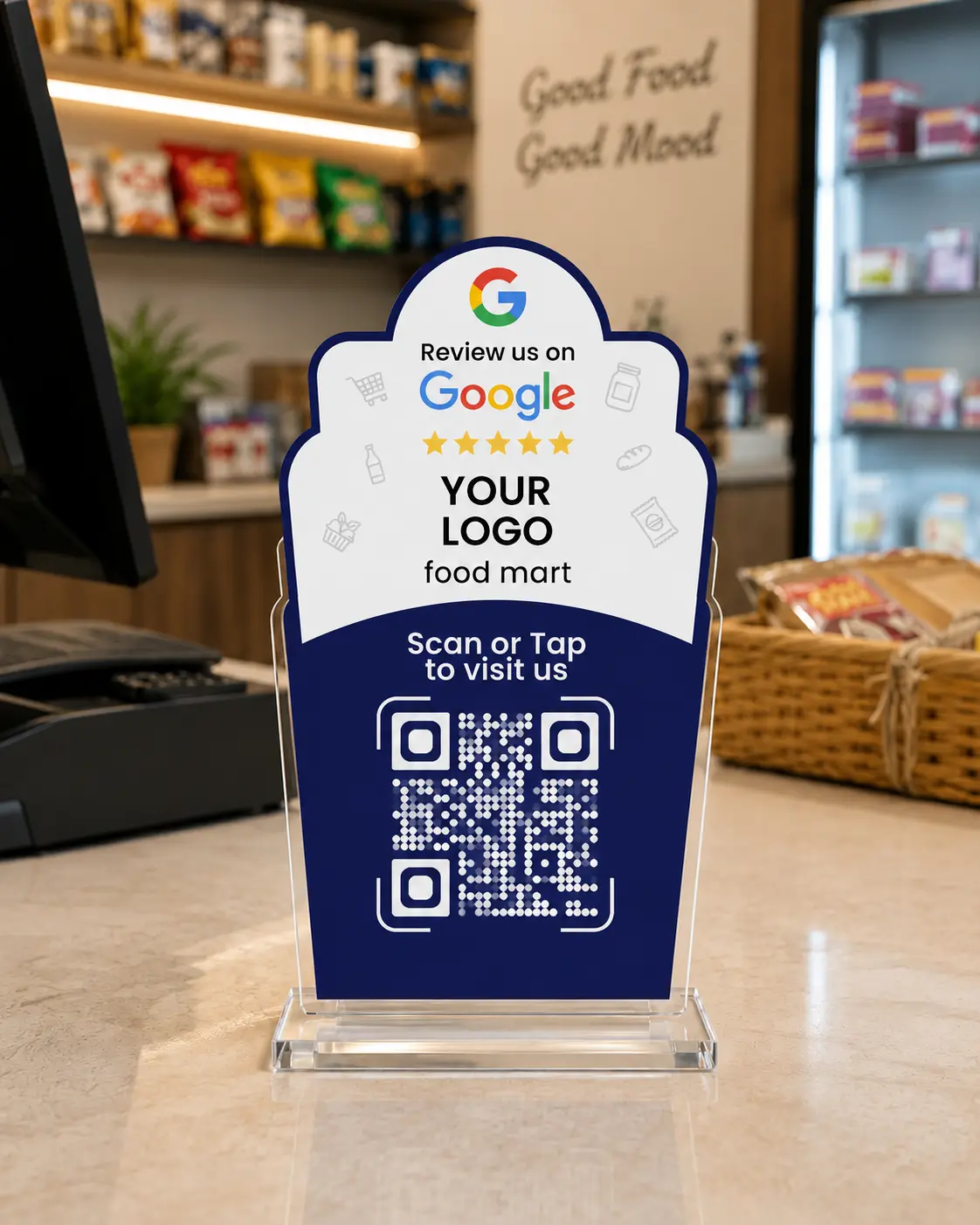
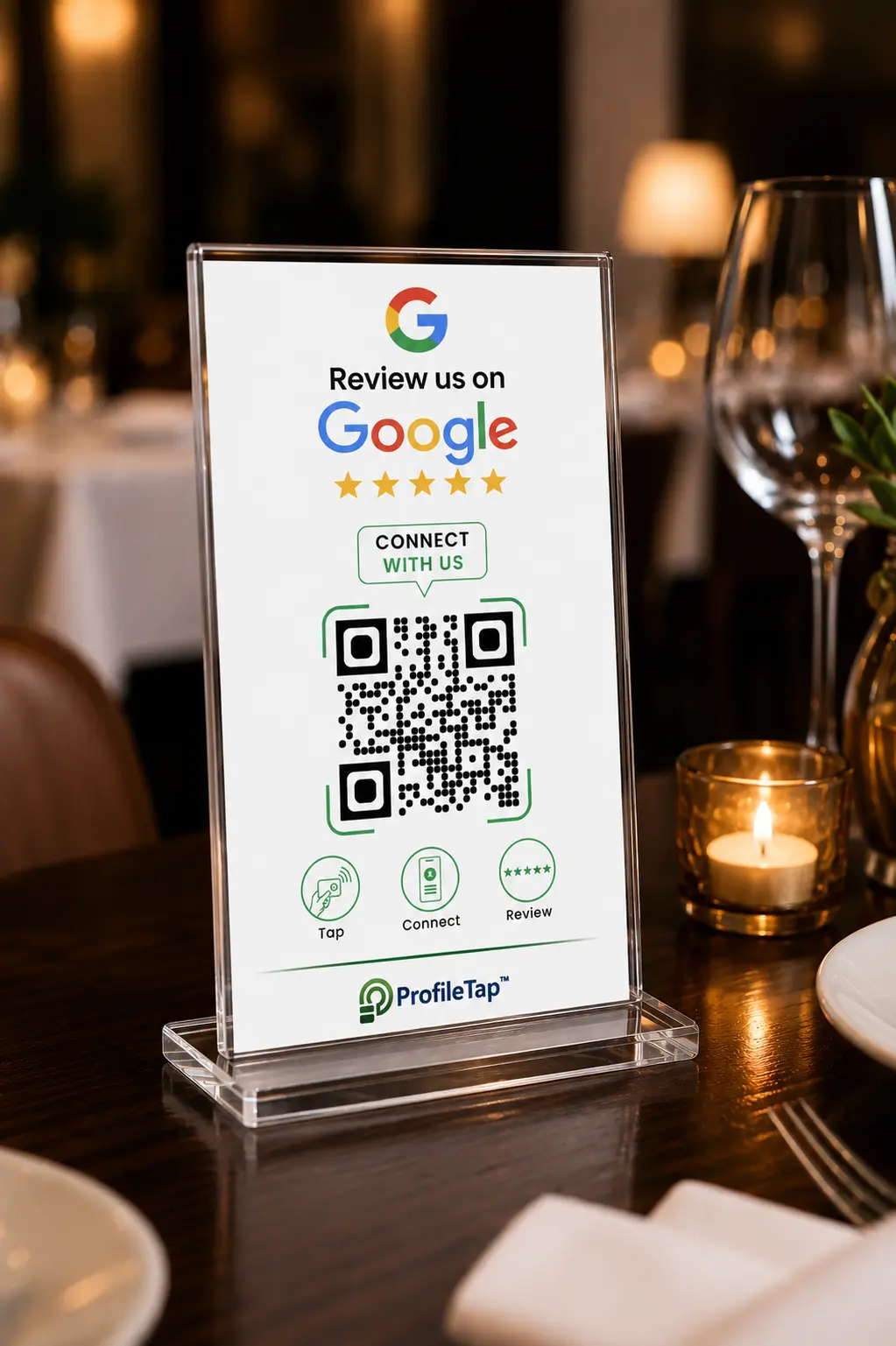
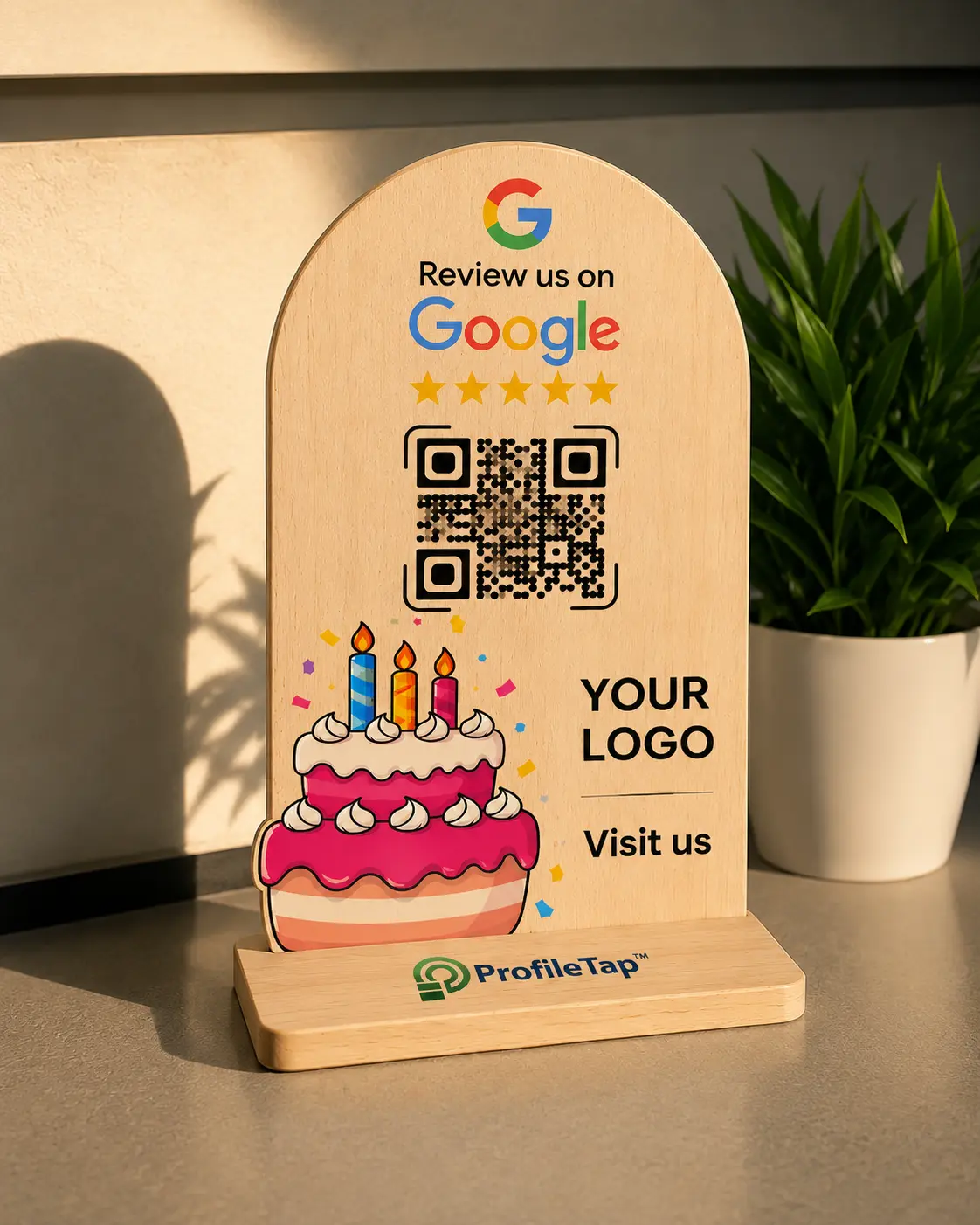
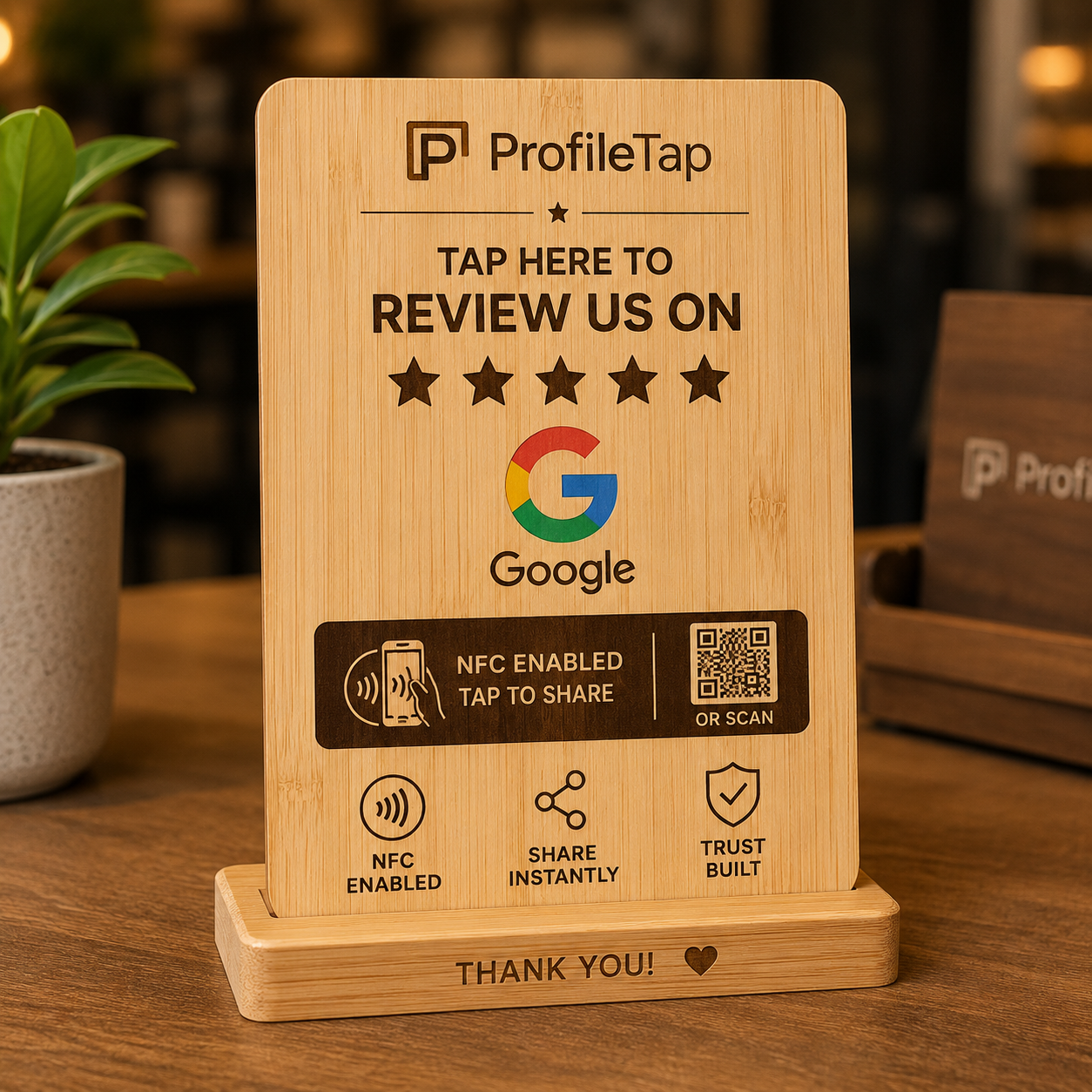
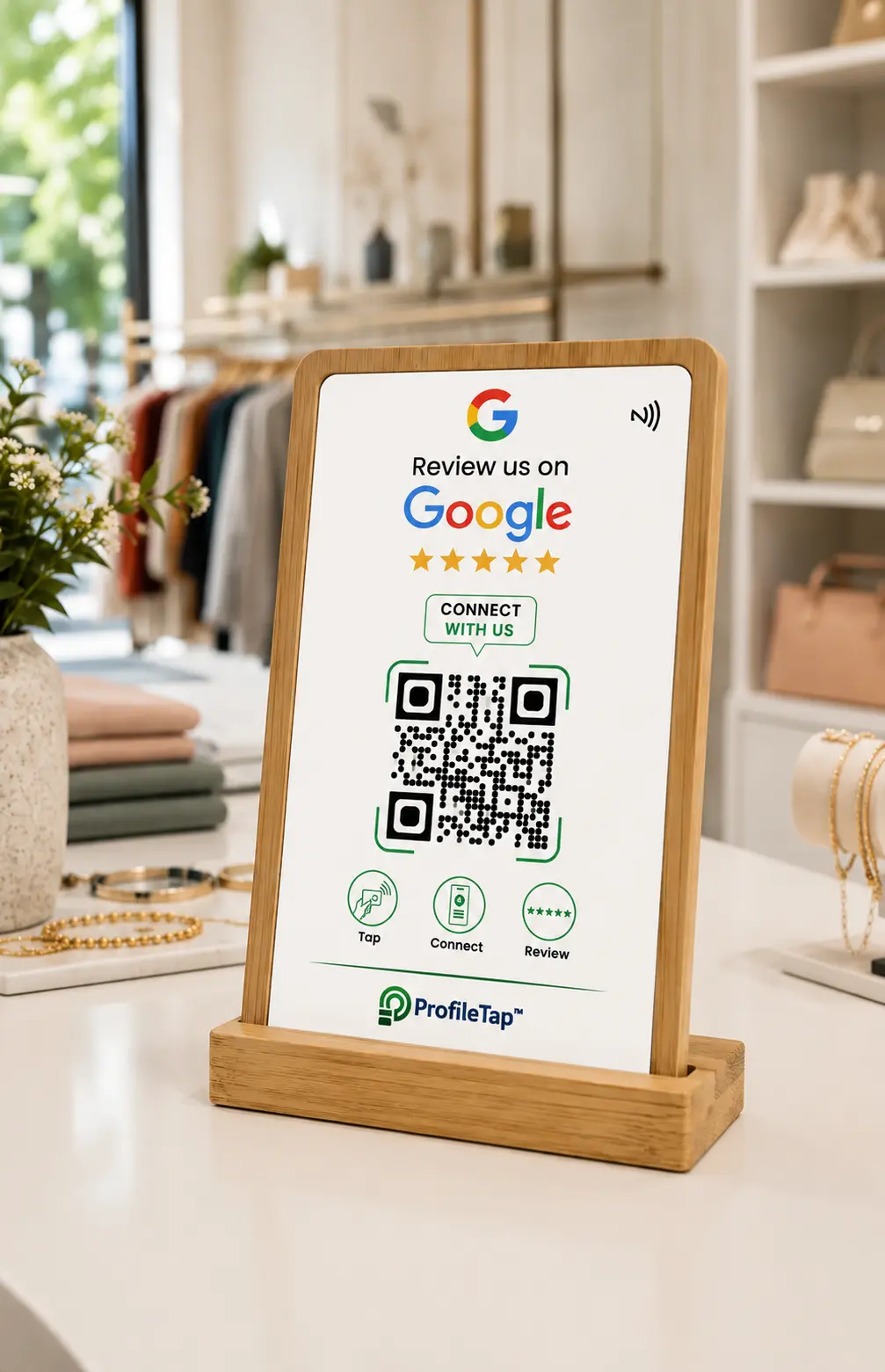
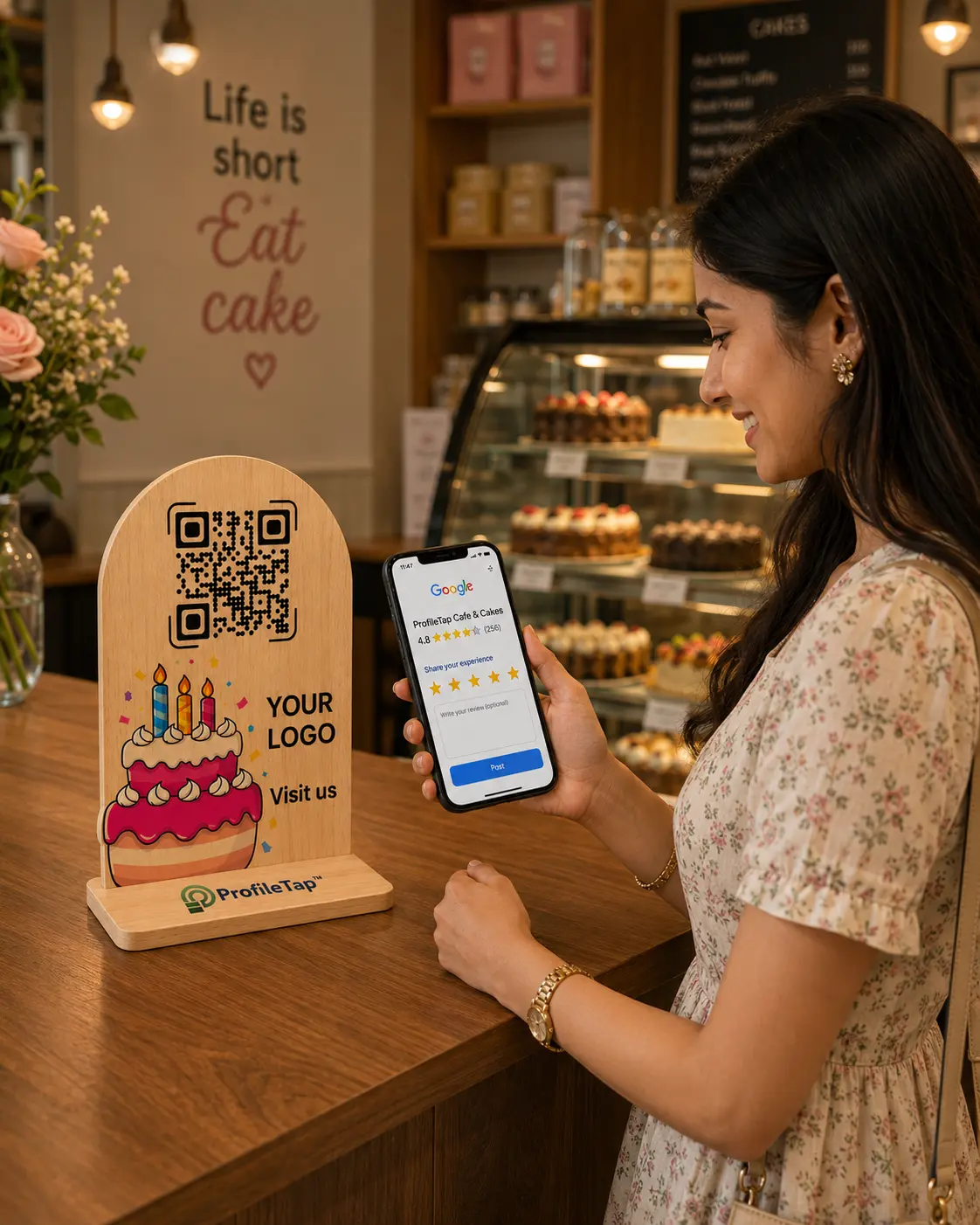
How the scan works, what it costs to set up, guests who would rather not scan, and running several outlets from one system.
Put your dishes, prices and photos on a page you control, point a QR code at that page, and stand the code on each table. Guests scan with the phone camera, the menu opens in the browser, and you edit prices whenever you need to.
Build the menu page, generate one code that points at it, and stand that code on your tables. If you are comparing the best digital menu QR code in India 2026 options, the thing to check is whether the code survives a menu edit, because a code you must reprint defeats the purpose.
No. It opens in whatever browser the phone already has, exactly like any other web page. Nobody is asked to download anything before they can read what is for dinner.
Immediately. Edit the dish or the rate on your phone and the very next scan shows the change, which is why restaurants with volatile ingredient costs move first.
Keep a handful of printed cards behind the counter for them. The point is to cut your reprint cycle from monthly to almost never, not to force every guest onto a screen.
Yes, and most owners do. The best QR code menu for restaurant in India 2026 setups pair the menu at the start of the meal with a Google review prompt at the end, using the same table standee.
The hardware prices are on the standees above and are one-time purchases with a GST invoice. Talk to us about the menu setup itself and we will scope it against your number of outlets.
Each outlet can run its own menu behind its own code, so a Bandra branch can price differently from an Andheri one without two separate systems to maintain.
The menu code is usually the first thing an outlet puts on the table. These are what owners look at next.
Tell us how many tables and outlets you run, and we will map the setup for your floor.
Scan or tap · edit prices any time · no guest app · GST invoice · hardware shipped across India