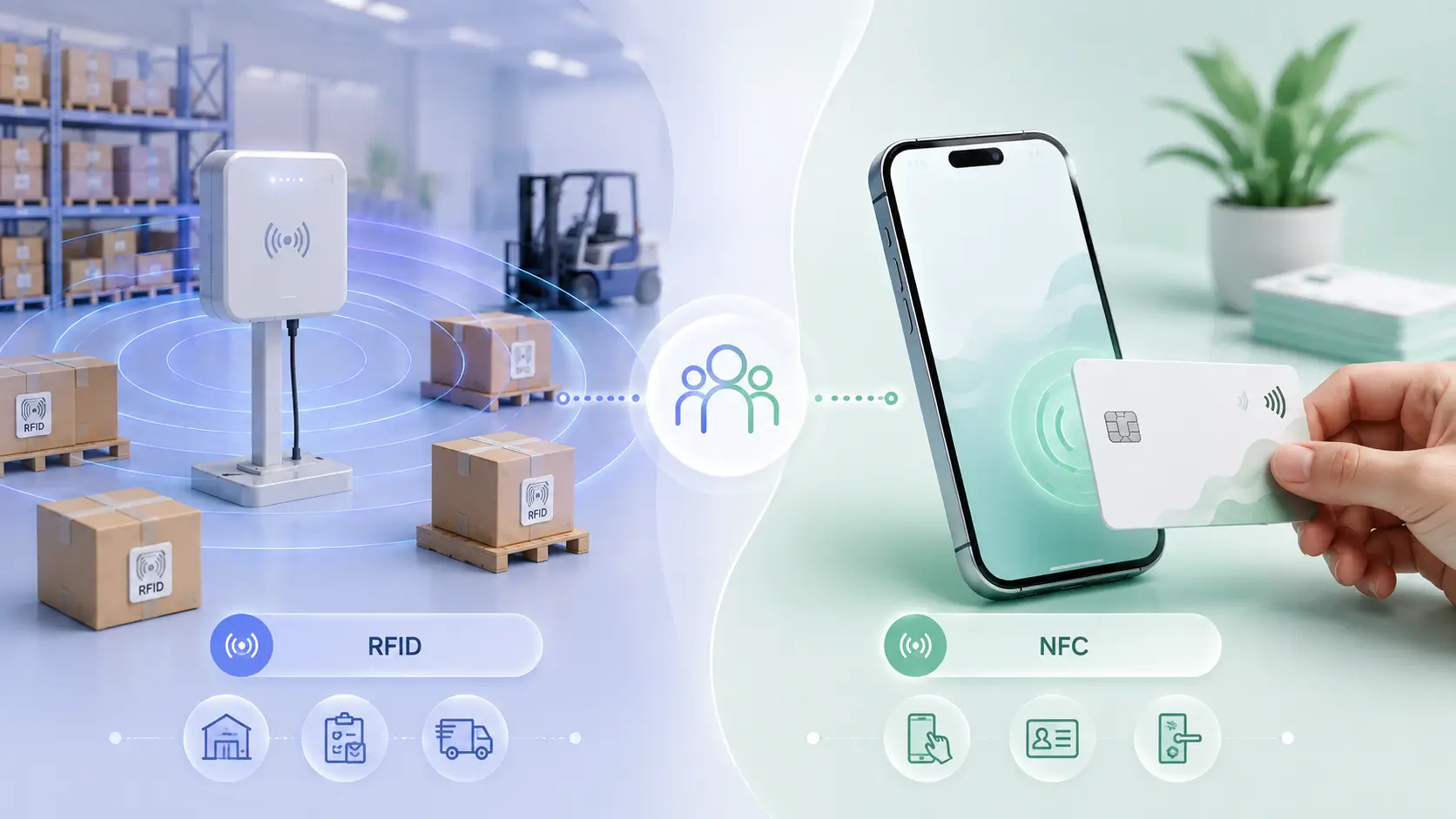

NFC is a subset of RFID, not a rival to it. Both use radio waves to read a chip without contact; the difference that matters is range. RFID can be read from metres away, NFC only from about four centimetres. That one number decides which is right for a given job.
People usually reach this comparison while deciding between two products, so here is the practical version rather than the spec-sheet one.
People come at this from both directions, and NFC vs RFID is the same question turned around. Is NFC RFID? Yes, in the way a sparrow is a bird: a subset, not a rival.
The differences that actually matter
- Range. RFID reads at distance, which is the whole point for a toll gate or a warehouse pallet. NFC needs deliberate proximity.
- Direction. RFID is largely one-way — a reader interrogates a tag. NFC devices can both read and be read, which is why a phone can act as a card.
- Frequency. NFC is fixed at 13.56 MHz. RFID spans several bands, and the band decides the range.
- Reader. Almost every modern phone reads NFC. Most RFID bands need dedicated hardware.
Why short range is the safer design
For anything you hand to a stranger, being readable from across a room is a liability rather than a feature. NFC's four-centimetre limit means a read only happens when someone deliberately brings two things together, and both parties can see it happening. That is precisely why banks were willing to put NFC — and not long-range RFID — on payment cards.
Where each one shows up in India
You already use both. FASTag on your windscreen is RFID — read at speed, from a gantry, without you doing anything. Tap-to-pay at a shop counter is NFC, and so is a smart visiting card. Retail inventory and access control lean RFID; anything involving a phone leans NFC, because the phone is the reader.
For a card you hand over, NFC is the only sensible choice — the other person's phone is already the reader, so nothing extra is needed on their side. We do not sell RFID products; if you are comparing for a card, the NFC card range is the relevant one. For the chip inside one rather than the products, see what an NFC card is.