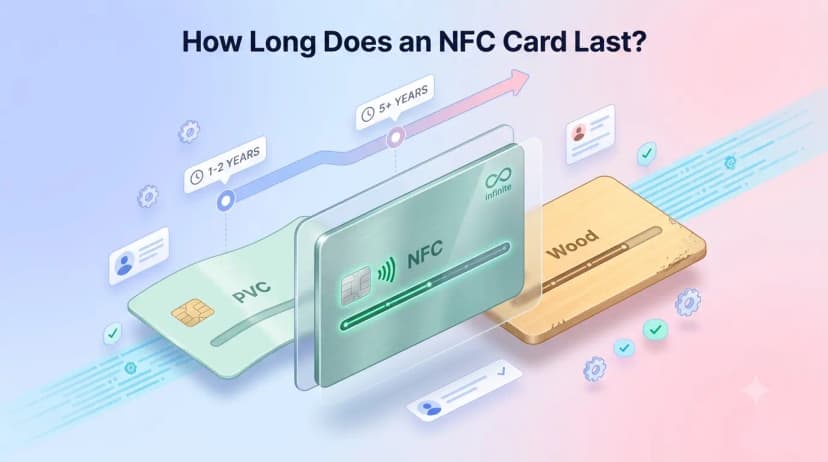

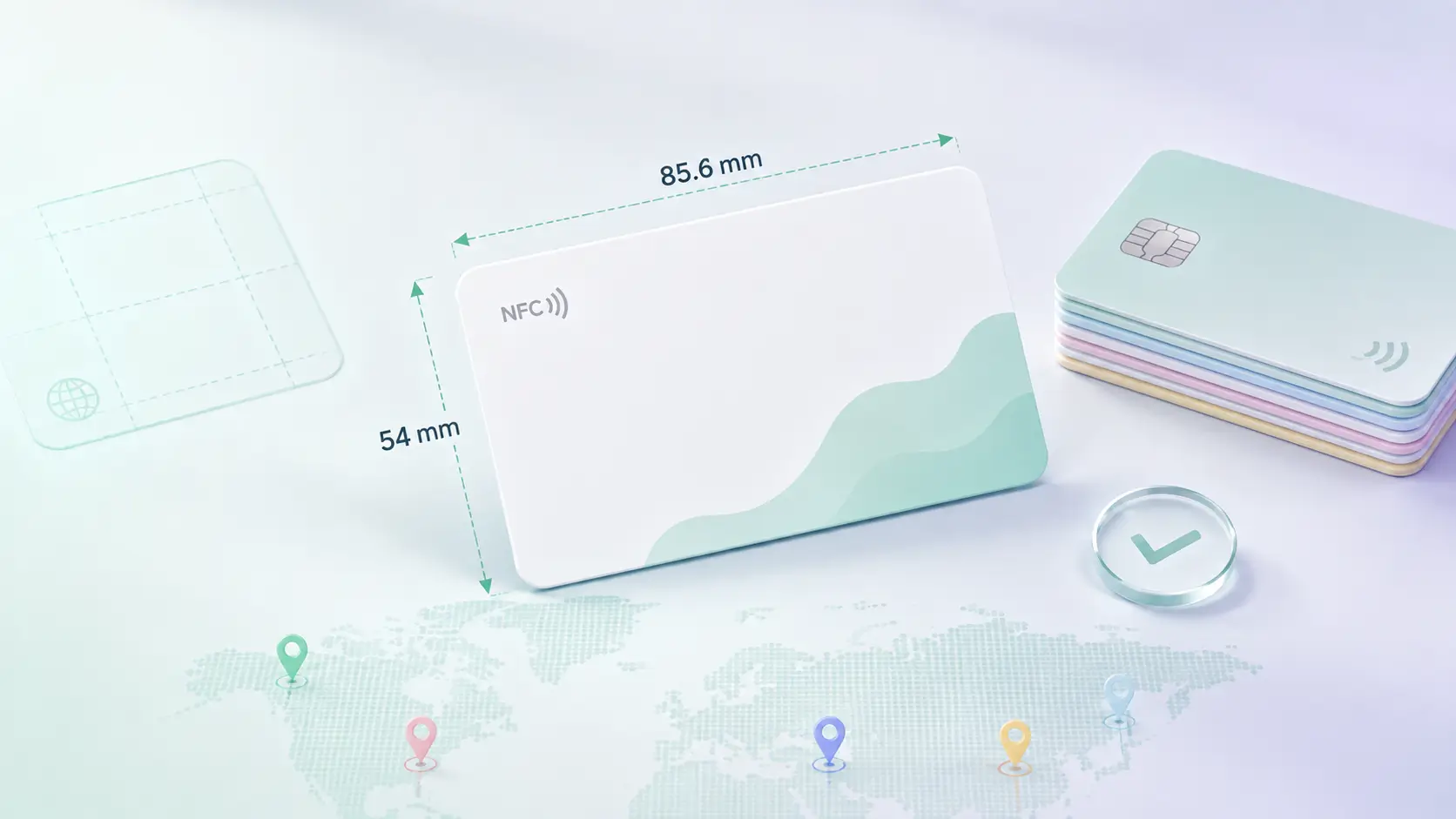
The standard NFC card size is 85.6 x 54 mm, the ISO 7810 ID-1 format, identical to a debit card. Printed visiting cards follow a different size in every region, but an NFC business card is built as a card first, so it uses the one format every wallet already fits. The NFC card dimensions do not change with the material either: metal, PVC and wood all come out on the same rectangle. What does change between cards is thickness and weight, covered below, along with the artwork sizes and the one thing you should never do to a card.
The numbers
- Every NFC card is 85.6 x 54 mm, which is 8.56 x 5.4 cm or 3.37 x 2.13 inches. It fits any wallet slot a bank card does, in any market.
- The footprint is fixed. Thickness and weight vary by material: PVC is close to 0.8 mm, and wood and metal are thicker.
- The antenna loops around the edge, so never punch or trim a card. Artwork sits inside a 2 to 3 mm safe margin, at roughly 1011 x 638 px for print.
Why ID-1 instead of the paper card size?
Printed visiting cards follow regional conventions: 89 x 51 mm in India and North America, 85 x 55 mm across most of Europe. NFC cards skip all of that and use the banking standard, because the card has to fit a wallet slot anywhere in the world and carry an antenna loop of a predictable size. One card then works in every market. The full printed-card chart is in our visiting card size guide.
| Card | Size | Standard | Fits a wallet slot |
|---|---|---|---|
| NFC card (PVC, wood, metal) | 85.6 x 54 mm | ISO 7810 ID-1 | Yes, everywhere |
| Debit or credit card | 85.6 x 54 mm | ISO 7810 ID-1 | Yes, everywhere |
| Indian printed visiting card | 89 x 51 mm | Regional convention | Partial, slightly longer |
| European printed card | 85 x 55 mm | Regional convention | Partial, slightly taller |
There is no separate digital business card size to plan for, and no digital visiting card size either. The physical card stays 85.6 x 54 mm, and the profile it opens is a web page that fits whatever screen is looking at it.
What varies: thickness and weight
PVC
- Around 0.8 mm, the same feel as a bank card
- The most wallet-friendly of the three
- Cheapest to replace if lost
Wood and metal
- Wood is thicker and lighter than it looks, with visible grain that differs from card to card
- Metal is thicker again and noticeably heavier, which is most of the impression it makes when handed over
- Both sit less flat in a tight wallet than PVC
Where does the antenna sit?
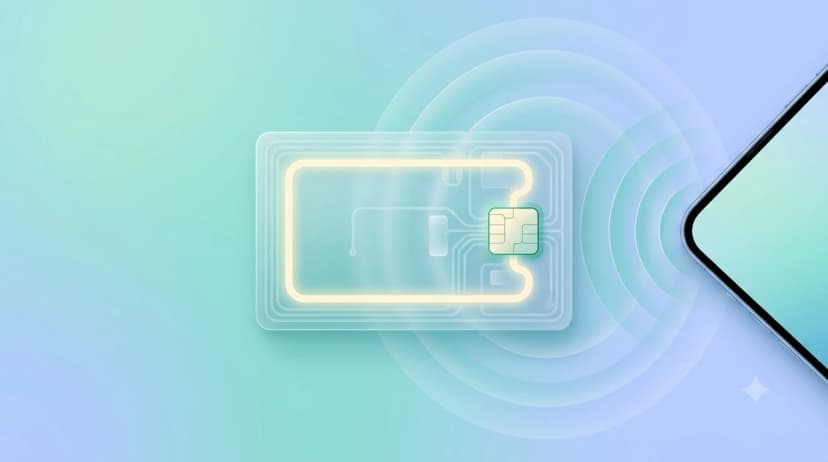
The chip itself is only a few millimetres across. What takes up space is the antenna, a thin loop running around the edge of the card, which is why punching a lanyard hole can kill a card, and why a sharp fold across the edge does more damage than a scratch in the middle. It also means the whole card is the tap area: you do not need to aim at a particular spot on the card, only at the right spot on the phone.
Do not modify the card
- No punching, trimming or folding. A cut near any edge usually breaks the antenna loop, and the card stops reading.
- Need it on a lanyard? Use a card holder or a keychain tag instead.
If you are designing artwork for one
Design to 85.6 x 54 mm with a 2 to 3 mm safe margin, and keep important text away from the edges, because card cutting drifts just as printing does. At 300 DPI that is roughly 1011 x 638 pixels at trim. There is far less to fit than on a paper card, which is the point: your details live on the profile the card opens, so the surface only needs your name, logo and a QR code. Compare materials and finishes before you commit to one.