
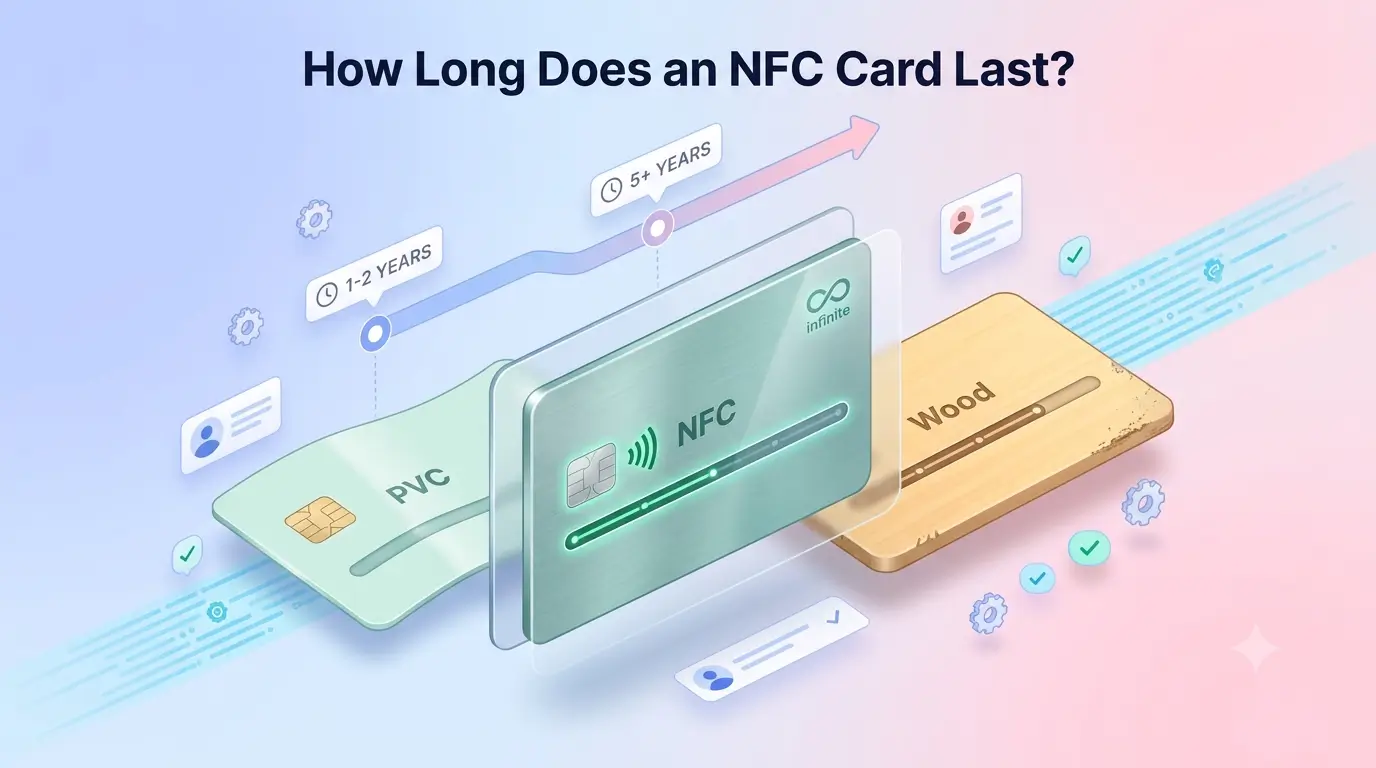
An NFC card usually lasts longer than you will want to keep it. An NFC chip has no battery and no moving parts, so nothing inside it runs down with time; what wears out first is the card body around the chip. In normal wallet use a PVC card lasts several years, and a metal card usually outlives the job title printed on it. Most cards get replaced because someone's details changed.
The short answer, in three lines
- The chip is passive. It has no battery, no firmware to update and no subscription inside it; the phone powers it for the moment of the read.
- Cards die from damage: a fold or a punched hole through the antenna that runs around the edge, or long spells of heat.
- What the card opens stays current, because the chip holds a link to a profile you can edit.
Why is there nothing to run down?
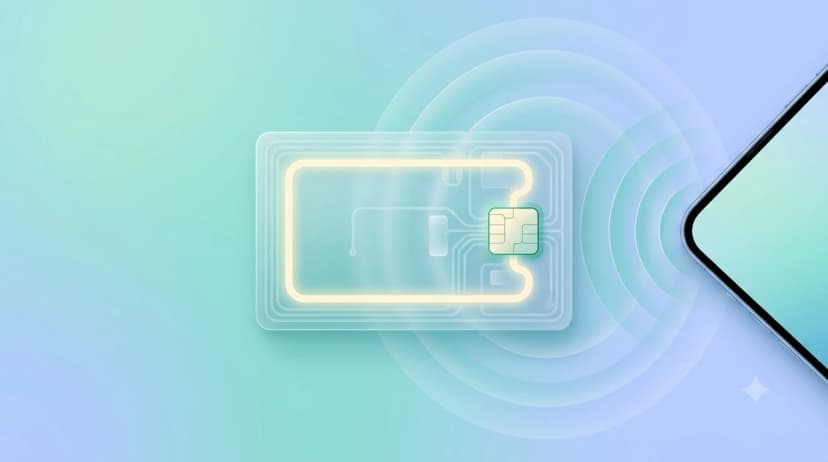
The chip only wakes up when a phone is close. It has no power source of its own; the reading phone powers it for a fraction of a second through the antenna, and the rest of the time it sits inert. Common NFC chips such as NXP's NTAG21x family are specified for about 100,000 rewrites and ten years of data retention, and reading the chip does not wear its memory. A profile card is written once and then only read, so the chip is rarely the part that gives up first.
What actually ends a card's life?
What does not
- Water, for PVC, which is the same material as a bank card
- Years unused in a drawer, since there is nothing to drain
- Thousands of taps, because reading does not wear the chip
- A change of details, since you update the profile and keep the card
What shortens it
- A sharp fold across the antenna loop, which runs around the edge of the card
- A punched lanyard hole, if it cuts through that loop
- Long spells of heat; a car dashboard in an Indian summer is hard on PVC
- Print wear, which shows long before the chip is affected; the card still works but looks tired
How long does each material last?
| Material | Typical life in wallet use | Weak point | Strong point |
|---|---|---|---|
| PVC | Several years | Creasing | Waterproof and flexible, like a bank card |
| Wood | Several years | Prolonged damp | Does not crease |
| Metal | Ten years or more | Weight in a thin wallet | Resists creasing and surface wear |
Two caveats
- Anything printed on the card can still go out of date. The profile behind the chip updates; the ink on the front stays as it was printed.
- Real chip failure is rare. If a card stops responding, run through the checks linked below before deciding it is dead.
What never needs replacing
The information. The chip stores a link to your profile, so an NFC visiting card printed today still opens your current details three years from now, and every change happens in the profile. If a card does stop responding, work through the troubleshooting checklist before you replace it. If you are picking a material to keep for years, compare them in the NFC cards collection. PVC cards start at ₹599, wood at ₹1,299 and metal at ₹1,899, all one-time prices with no subscription.