

The best AI tools for small business in India are the practical ones: an assistant that drafts a WhatsApp follow-up, an invoicing app that handles GST without a CA on speed dial, a design tool that turns a product photo into a post. This guide ranks the best AI tools for SMB owners by the job they do, gives you a checklist for picking AI for small business use without wasting a subscription, and marks where a human still has to do the work, reviews included.
Before you sign up for anything
- Start with one tool for the one job that eats the most time, give it thirty days, then add the next.
- Judge every tool on INR pricing, a phone-first interface, GST compliance where money is involved, and whether it reaches customers on WhatsApp.
- Reviews are the exception: use tools to collect genuine reviews and to see who to ask, and write the replies yourself.
- A tool that lives inside something you already use beats a tool with its own dashboard.
Why are Indian small businesses adopting AI now?
Three things changed between 2024 and 2026. Tools that were priced in dollars for American teams now have India plans or free tiers with usage limits that a one-person business rarely hits. WhatsApp and Google became the real infrastructure of an Indian business, one for communication and one for reputation, and tools that plug into both finally exist. And the competitor in the next lane may already be using them, so their follow-up goes out while yours is still on the to-do list. What matters now is which tools fit a workflow run from a phone between customers.
Which categories of AI tools do Indian small businesses use?
Searches for "AI tools for small business India" mostly lead to five categories, and the first one comes with a warning.
Reviews and reputation
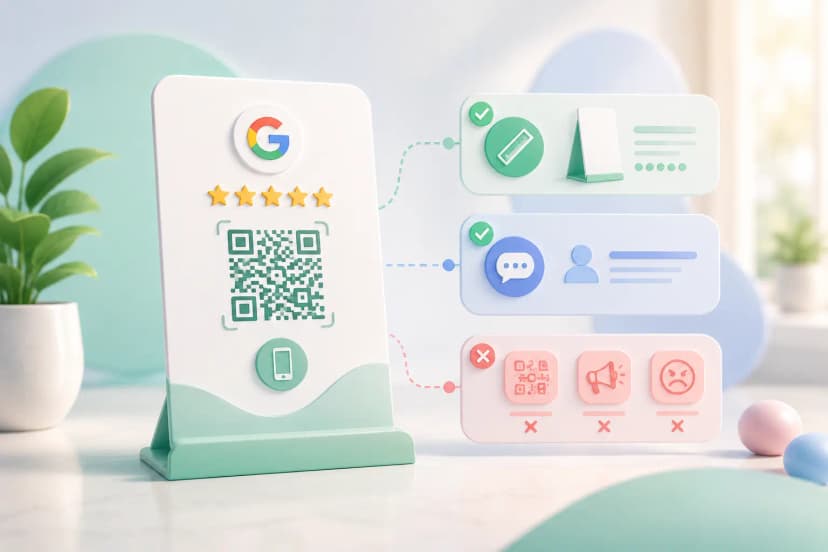
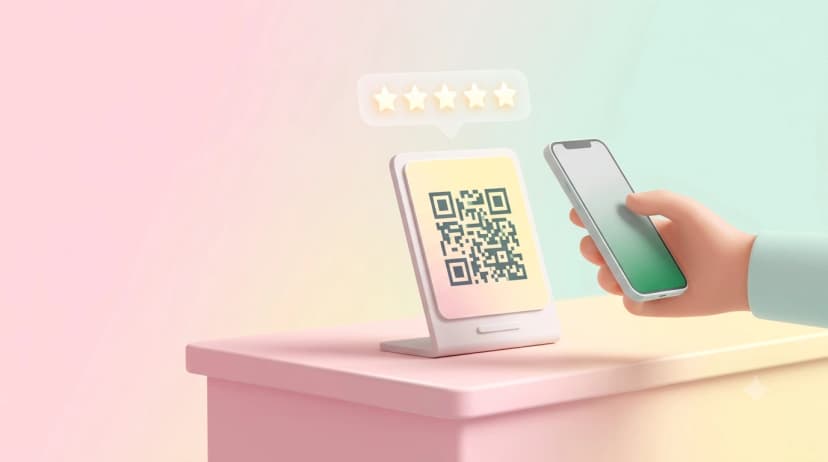
Google reviews drive footfall for every clinic, restaurant, salon and coaching centre in India; a listing with more recent, well-rated reviews tends to be chosen over one without. What a tool can do here is collect reviews, bringing them into one place, prompting the right customer at the right moment through a review card at the counter, and showing you which happy clients have not yet been asked. What a tool should not do is write the reviews or the replies for you. Google's policies treat reviews written by software as fake, and a copy-pasted reply reads as one. Collect with tools; reply to a negative review in your own words.
Business communication
Emails, WhatsApp messages and client follow-ups take up a large part of an owner's day, and a drafting assistant takes the first draft off your hands. ChatGPT and Gemini are free to start and general-purpose, which means you write the prompt every time. The ProfileTap business identity takes a different approach: it shows how often your card was tapped or your profile opened and which links got clicked, so you know when a follow-up is worth sending.
Accounting and invoicing
GST invoicing, expense categorisation and the monthly report. Zoho Books is India-built and GST-compliant with assisted features, Vyapar is the popular pick for shops and traders, and Khatabook suits a very small business that mainly needs a ledger.
Marketing and social media
Canva's assisted design covers most of what a small business posts, and its free tier handles the basics. Buffer schedules and suggests posting times. Copy.ai writes marketing copy well but has no India-specific features, so expect to edit the idiom.
Customer support
Chatbots, FAQ automation and ticket routing. Freshdesk is India-built and scales well as a business grows, Tidio is a simple chatbot builder, and for a business that lives on WhatsApp the WhatsApp Business API with an assistant layer is the natural fit.
How do I choose AI for small business use without wasting money?
Run every candidate through six questions. A tool that fails two of them will be abandoned within a month, whatever it promises.
| Check | Why it matters in India |
|---|---|
| INR pricing or a usable free tier | A dollar subscription converts to a serious monthly cost for a one-person business |
| Works fully on a phone | You run the business from your phone; a desktop-only tool will not get opened |
| GST compliance | Non-negotiable for anything that touches invoices or expenses |
| Reaches customers on WhatsApp | That is where your clients already are; a tool that cannot get there loses most of its value |
| Setup under thirty minutes | There is no tech team; a multi-day setup never finishes |
| Plugs into what you already use | Google Business Profile, WhatsApp, your accounting app; another silo is another chore |
Then pick one. The biggest mistake Indian SMBs make is adopting five tools in a week. Spending hours on follow-ups points to a drafting assistant; struggling with GST points to an accounting app; posting inconsistently points to a content tool; chasing reviews points to review collection tools. Solve the one that costs the most time first.
What is different about a tool built into your business profile?
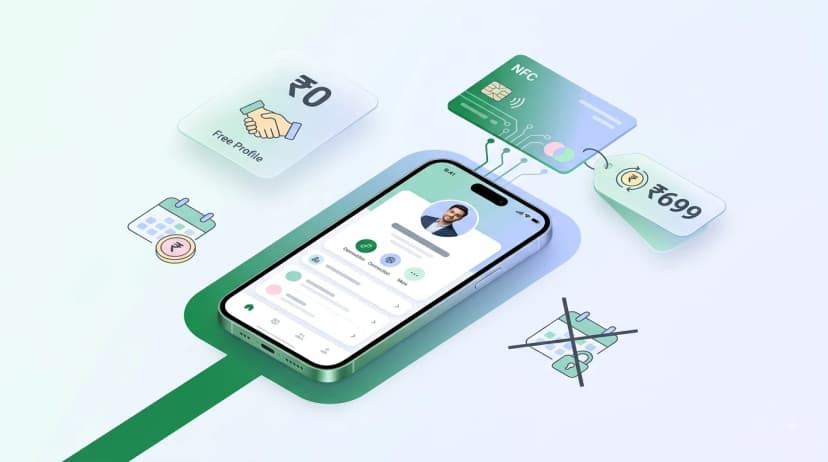
Most tools on this list are standalone: a new sign-up, a new dashboard, one more app. The business identity profile lives where your clients already meet you. Every NFC tap, QR scan and profile view shows up in its analytics, so there is nothing to export or paste before you decide who to follow up with. It is built for India with INR pricing, and its WhatsApp button lets clients reach your business straight from the profile.
Where the business profile is easier
- Nothing to set up if you already have the profile
- Follow-up timing based on real taps and views
- Review collection tools and engagement in one place
- One link for your card, your WhatsApp and your Google reviews
Where a standalone tool is still the right call
- Deep accounting, where Zoho Books or Vyapar do far more
- Design and scheduling, where Canva and Buffer are the specialists
- Support ticketing at volume, where Freshdesk is built for it
Which tools fit which business type?
| Business | Reputation and follow-up | Communication | Money | Content |
|---|---|---|---|---|
| Doctor or clinic | Business identity profile with review collection tools | WhatsApp Business API; Practo or Lybrate for appointments | Zoho Books | Not a priority |
| Real estate agent | Business identity profile for lead follow-up | WhatsApp Business with an assistant | Zoho Books | Canva and ChatGPT for listings |
| Freelancer | Business identity profile for engagement tracking | ChatGPT or Gemini for drafts | Vyapar or Zoho Invoice | Canva for portfolio, Buffer for posting |
How should I get started?
Name your biggest time-waster: follow-ups, invoicing, marketing or reviews. Pick one tool for that job using the checklist. Give it thirty days, because these tools get better with data and three days tells you nothing. Then measure: hours saved, deals closed, reviews collected. If it worked, add the next job; if it did not, cancel it without guilt. The right AI tools for small business pay back the setup time within weeks, and the wrong ones show themselves just as fast.
Where these tools fall short
- No tool should write your Google reviews or replies. Reviews written by software violate Google's policies and can get a listing penalised.
- Drafting assistants are confident and sometimes wrong. Read every message before it goes to a client, especially anything with a price or a date in it.
- Free tiers change. Check the current limits before you build a routine around one.
Start with the profile your clients already see
If client engagement and reputation are the pain points, the business identity profile takes about five minutes to set up and starts showing engagement from the first tap. For the review side, see how to get more Google reviews.