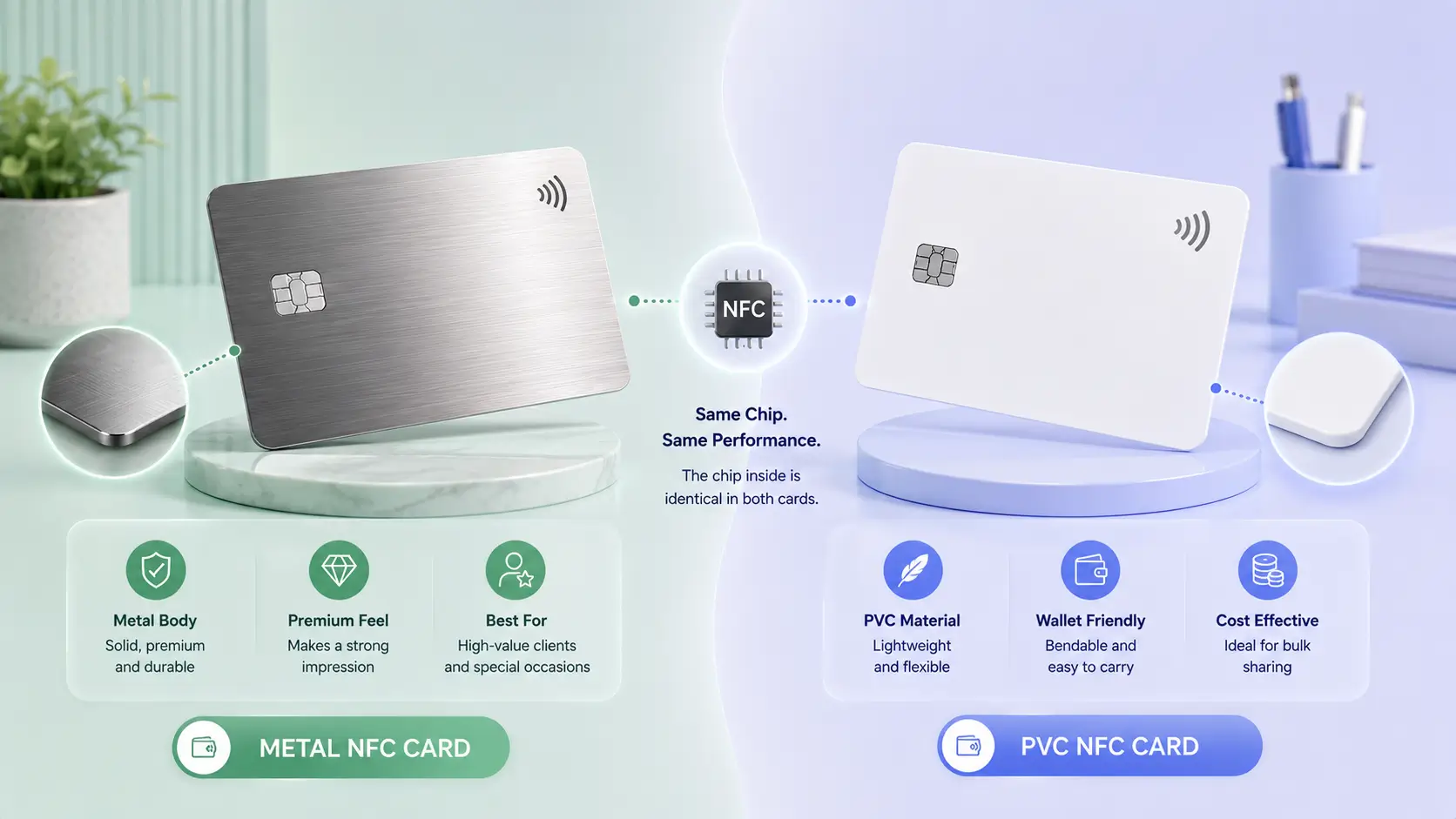

Metal vs PVC NFC card comes down to what the card is doing for you. If it is the first thing a client judges you on, metal earns its price. If you hand out cards constantly and want them to survive a wallet without costing much, PVC is the sensible choice. The chip inside is identical — only the body changes.
That last point is worth repeating, because it is where most comparisons mislead. Neither material makes the card work better. Both open the same profile at the same speed.
What metal actually buys
Weight, and the second of attention that comes with it. A metal card is noticed before it is read, which is genuinely useful in professions where the client is assessing you as much as your service — consultants, jewellers, senior sales, anyone whose fee is the objection. It also survives being carried indefinitely.
The trade-offs are real too. Metal costs several times PVC, so handing them out freely gets expensive. It is thicker in a wallet. And engraving is less flexible than printing if you want colour.
What PVC does well
A PVC card is the same material as a bank card — waterproof, flat, 0.8 mm thick, and it takes full-colour print that metal cannot. At a fraction of the price you can give one to everybody rather than rationing them. For a shop counter, a site team or an exhibition stand, that matters more than heft.
How to choose in one question
Ask how many you will hand out in a year. Under fifty, to people making a considered decision about you — metal. Hundreds, to anyone who walks in — PVC. Plenty of people carry both: metal for meetings that matter, PVC for volume. There is also wood in between, which reads as considered without the price of metal.